Alphabet Soup: LGBTQIA+ Identities and Relationships A Who’s Who of Who Likes Whom
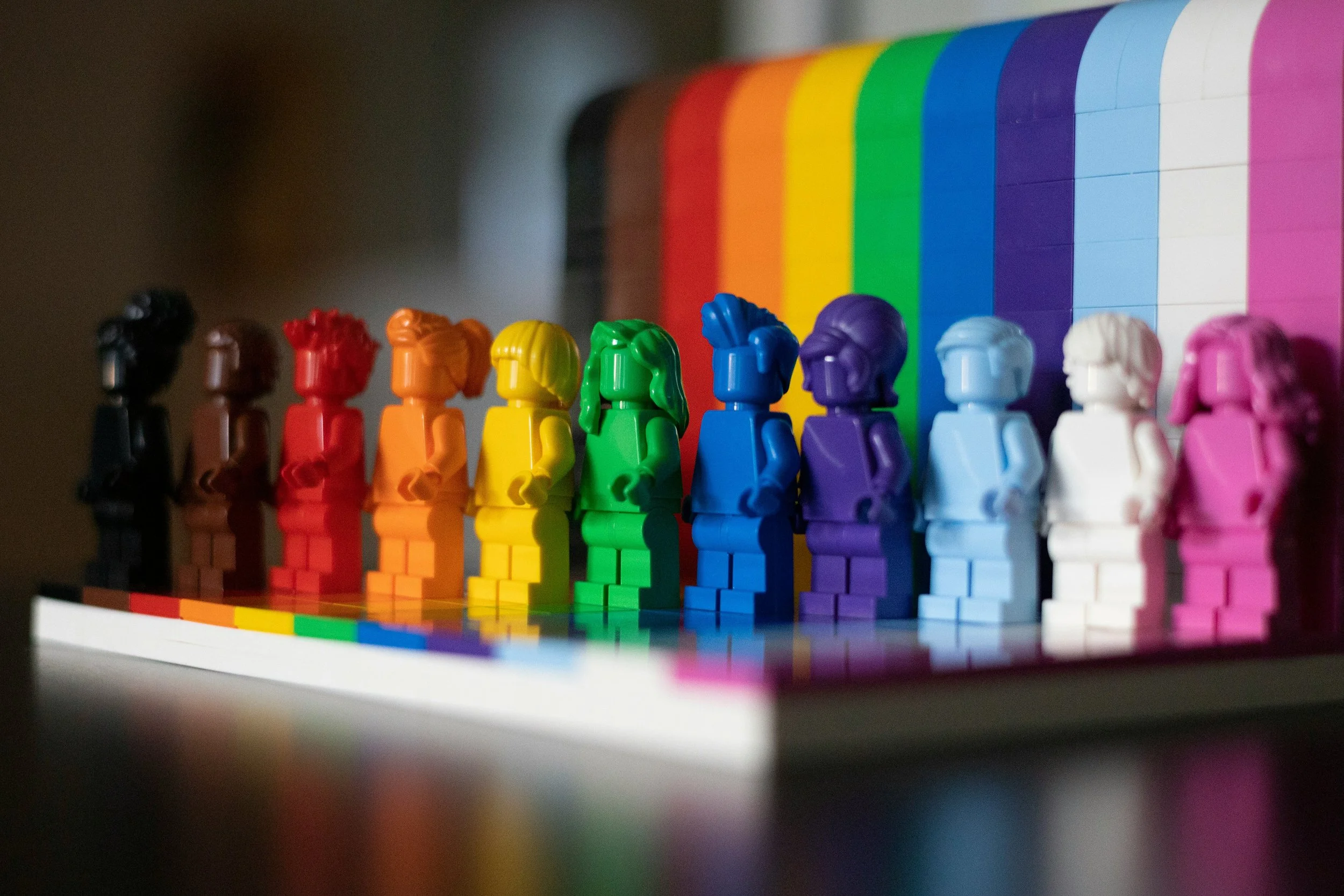
Welcome back to our two-part series on LGBTQIA+ identities, relationships, and community. If you missed Part 1, we explored the fascinating complexity of human attraction — and how it informs so much about who we are and how we connect. In this installment, we're meeting the letters themselves: Lesbian, Gay, Bisexual, Queer, and Asexual identities, along with several other significant groups who often get left out of mainstream conversations. At Restoring Hope Counseling, we're committed to affirming care for all identities — and that starts with understanding. Whether you're an ally, a parent, or exploring your own identity, this guide is for you.
There’s no possible way for me to condense all of human sexuality into this series (prove me wrong!), so I will 100% miss a ton of people and their experiences—and not everyone who identifies with one of these labels will see themselves in what I do get to, or how I explain it. So, if it’s appropriate, it can be illuminating to ask someone what the words they identify with mean for them or how they experience them.
Let’s start with the familiar:
Heterosexual
This term describes anybody primarily attracted to people not of their own gender. It’s often (usually) referred to as straight (I’m doing the whole high school textbook key terms thing). The only thing to note there is that originally, straight was—and often still is—used to mean essentially “correct,” so it has an inherent whiff of heteronormativity, the tendency for people to assume (usually subconsciously) or act like being straight is the default or preferred way to be. We unknowingly commit heteronormative microaggressions all the time. That said, pretty much everybody says straight, usually without malice, so we’re going with it. More and more heterosexual people (about 15% now) are recognizing the fact they don’t live entirely at the tail end of the spectrum, and may identify as mostly straight, heteroflexible, or sexually fluid (which can also be used to describe some people’s experience of bisexuality).
Gay
Bet you can’t guess…gay people are primarily attracted to the same gender, and the word is used more often than not to refer to guys who like guys (although lesbians sometimes refer to themselves as gay, but you probably already knew that). “Gay” began as a derogatory word, but like “straight,” it’s almost universally used, so we’re rolling with it. I can’t actually think of a word for gay men that didn’t originate as a slur or hasn’t been weaponized at some point, so it’s pretty much all we’ve got to go on. (Fun fact: “The f word” is inspired by the inquisition and basically means gay men deserve to be burned alive!) Gay is still used as a slur or insult, particularly among seemingly heterosexual dudes to denigrate or emasculate other men, which is obviously not cool, or as a stand-in for a whole range of negative adjectives (also not cool).
Lesbian
Lesbians—named after the Greek island of Lesbos, thanks to the poet Sappho—are women who are primarily attracted to other female-identifying people. Like men in relationships with men, lesbian relationships have fewer rigid social and gender expectations and less power imbalance than many straight relationships. And though some lesbians’ gender expression (how they present themselves) might be more masculine or feminine, no one is the “man” in the relationship, just like no one’s the woman in a gay relationship. That would defeat the purpose! Furthermore, lesbians haven’t all dated or all know one another (thanks, media), always move in right away, or hate men (misandry), and they can absolutely be lesbian if they’ve been in relationships with men.
Bisexual (Bi)
Bisexual people are attracted to more than one gender. Many bisexual people will describe themselves as being attracted to “both men and women,” but terms like pansexual, omnisexual, or polysexual can fall under the bisexual umbrella, and specifically refer to people who are attracted to multiple or all genders (though they also might just call themselves bi). The percentage of out bisexual people is growing, driven largely by Millennials and Gen Z, who aren’t as bound by the pressures and expectations older generations faced. Harmful myths about bisexuals persist—that they’re more likely to be unfaithful than straight people (the opposite is actually true!), or are confused, or greedy, even. Both straight and queer communities contribute to biphobia by stereotyping, invalidating, and excluding bi people from their reindeer games. Bi folks, particularly guys, are often invalidated by assumptions that they’re actually gay. Bi erasure is also a big deal. For example, a bisexual man married to a woman is considered and referred to by most as straight (still bi), and a bisexual woman in a relationship with another woman will erroneously be called a lesbian. Despite the success of a few queer-themed shows, LGBTQIA+ representation in the media has decreased across the board in the last 10 years, but bi people are specifically underrepresented. Even when talking about queer people, folks often say “gay and lesbian,” ignoring the very real middle ground. In fact, most LGBTQIA+ people are on the bisexual spectrum!
Asexual (Ace)
Asexual people experience varying degrees of sexual attraction and/or desire for partnered sexual relationships. Contrary to what you might assume, asexual people can still have and enjoy sex, sometimes particularly in a relationship, given certain circumstances, or with the right person. There are lots of different ways to be ace, including gray-a (infrequent, low-intensity, or conditional sexual attraction) and demisexual (experiencing sexual attraction only to people they have an emotional connection with).
Aromantic is sometimes bundled in with asexuality, but is a distinct concept. Like asexual people, aromantic (or aro) folks have varying degrees of romantic attraction to others. People who are both asexual and aromantic are sometimes referred to as aro-ace. Both asexual and aromantic folks can identify with an affectional orientation like straight or bi! Both experience other kinds of attraction, too, and are more than capable of successful relationships.
Queer
Queer can be a little bit of a fraught term. Historically, it’s been used as a slur (still is sometimes), but LGBTQIA+ communities in general have reclaimed it. That said, not everybody will identify with, or even appreciate, the label. Some people use queer as their primary sexual/affectional identity, or use it to recognize themselves as existing somewhere outside traditional gender, sexual, and romantic norms. Despite its history, queer is becoming an increasingly widespread, shorthand term for LGBTQIA+ people, and is appropriate when used by respectful, queer-affirming people (just don’t say “queers!”). To acknowledge the different experiences of affectional and gender minorities, some people prefer to say “queer and trans.”
Ally
Last but certainly not least, let’s talk about allies. Allies are people who care about the wellbeing of queer and trans people and who confront heterosexism, misogyny, and anti-LGBTQIA+ language, systems, movements, legislation, etc., as a matter of social justice. They feel that when queer people do better, we all do better. Many allies consider their work for queer communities a civic, moral, and religious duty.
Okie dokie—thanks for hanging in till the end! Did you learn anything? Think about anything differently? That’s my hope. Next time, we’ll tackle the I and the T, along with “nontraditional” relationship structures, and a discussion of the barriers and struggles faced by queer communities that most people aren’t aware of. If you’ve made it this far, join me next time for our final blog on LGBTQIA+ people and experiences!
Disclaimer: This post is not intended to challenge the opinions or beliefs of any person or group. The informational contents are based on experiential and empirical evidence and research.
Written by: Justin Coffey, LPC